
Starting a new project is exciting, but for DevOps engineers, success depends heavily on planning the right architecture, processes, and operational strategy from the beginning.
Without asking the right questions early, teams often face issues later such as unexpected infrastructure costs, performance bottlenecks, security gaps, or deployment challenges.
Whether you're launching a startup product or building an enterprise platform, DevOps engineers should evaluate several key factors before writing the first line of deployment code.
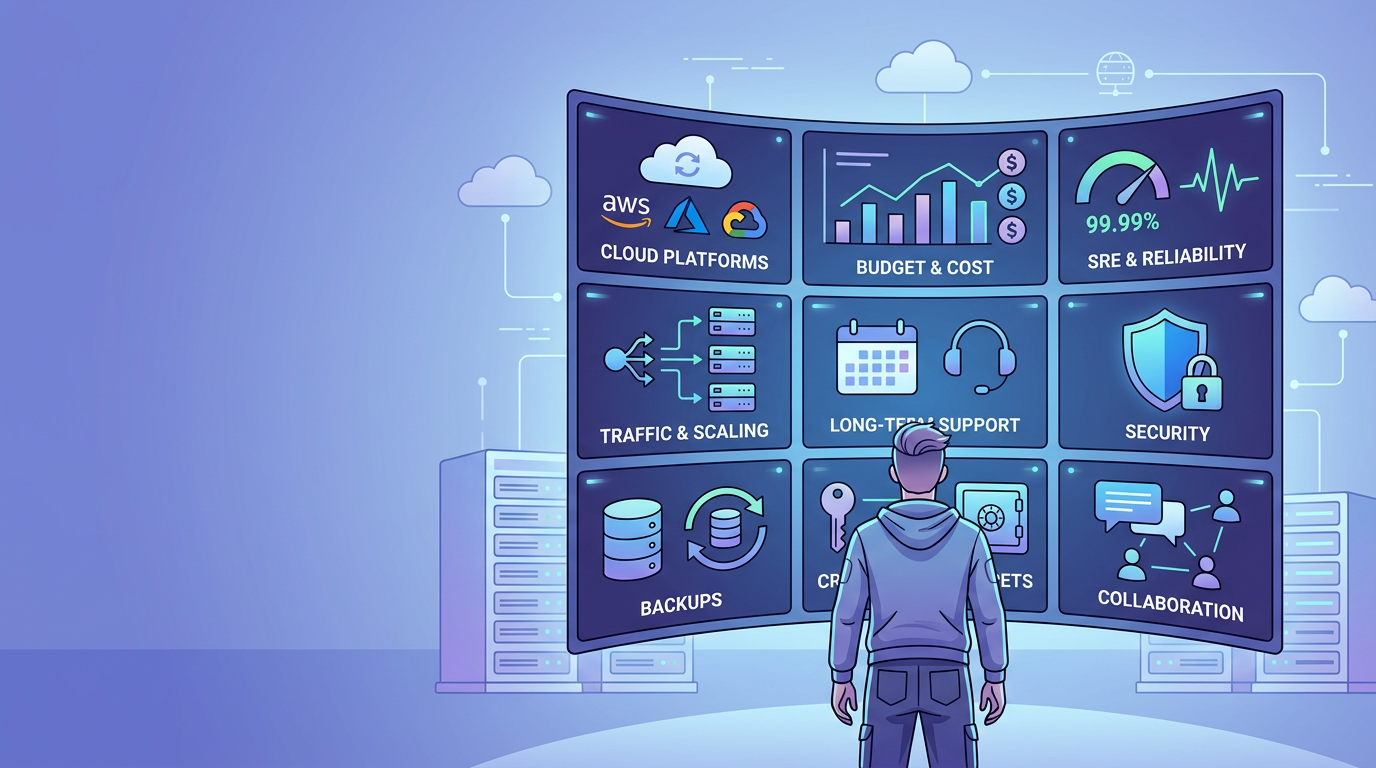
Here are important questions every DevOps team should address before starting a project.
---------------------------------------------------------------------------------------------------------------
- Which Cloud Platform and Infrastructure Will Be Used?
Choosing the right cloud platform and infrastructure architecture is the foundation of any modern application.
DevOps teams should evaluate:
- Cloud provider options (AWS, Azure, GCP, etc.)
- Infrastructure scalability requirements
- High availability architecture
- Cost optimization strategies
The selected platform will influence deployment models, networking design, monitoring, and long-term scalability.
Deployment Strategy
Another critical decision is determining how the application will be deployed.
Most modern teams adopt CI/CD pipelines to automate build, testing, and deployment processes. Automating deployments reduces human errors and enables faster, more reliable releases.
---------------------------------------------------------------------------------------------------------------
2. What Is the Project Budget?
Infrastructure and operational costs can grow rapidly if not planned properly.
DevOps teams should estimate costs related to:
- Cloud infrastructure
- Storage and networking
- Monitoring and logging tools
- Backup and disaster recovery
- Operational maintenance
Understanding the financial boundaries helps design cost-efficient and sustainable infrastructure.
---------------------------------------------------------------------------------------------------------------
3. Do We Need Site Reliability Engineering (SRE) Practices?
For systems that require high reliability and uptime, implementing Site Reliability Engineering (SRE) practices becomes essential.
This includes planning for:
- Monitoring and observability
- Alerting mechanisms
- Incident management processes
- Service-level objectives (SLOs)
Monitoring and Logging
Observability tools help teams understand system behavior and detect issues early.
DevOps teams should define:
- Performance monitoring tools
- Log aggregation solutions
- Metrics dashboards
- Alert notification channels
Disaster Recovery Planning
Unexpected failures happen. Having a disaster recovery strategy ensures minimal downtime and faster recovery.
A proper plan should include:
- Automated backups
- Multi-region strategies
- Failover mechanisms
---------------------------------------------------------------------------------------------------------------
4️. What Is the Expected Traffic and Capacity Requirement?
Before deployment, teams should understand how much traffic the system is expected to handle.
Important considerations include:
- Estimated user load
- Peak traffic conditions
- Infrastructure performance limits
- Load testing requirements
Scalability Planning
Applications should always be built with scalability in mind. DevOps teams should implement strategies such as:
- Load balancing
- Horizontal scaling
- Auto-scaling groups
- Container orchestration
This ensures the system can handle growth without performance degradation.
---------------------------------------------------------------------------------------------------------------
5. What Are the Long-Term Support Requirements?
Some deployments require ongoing operational support, while others are one-time deployments.
Understanding this early helps plan:
- Maintenance responsibilities
- Monitoring ownership
- On-call support processes
- Production support teams
This ensures a smooth transition from deployment to operational management.
---------------------------------------------------------------------------------------------------------------
6. How Critical Is Security for the Project?
Security must be integrated from the beginning of the project lifecycle.
DevOps teams should evaluate:
- Network security configurations
- Identity and access management
- Data protection strategies
- Application security best practices
Additional security measures may include:
- DDoS protection services
- Web application firewalls
- Security scanning and compliance checks
Compliance and Governance
Some industries must comply with regulations such as data privacy laws or security standards.
DevOps teams should ensure the system meets any regulatory or compliance requirements before going live.
---------------------------------------------------------------------------------------------------------------
7️. What Is the Backup Strategy?
A reliable backup strategy protects the system from data loss and service interruptions.
Key questions include:
- Are backups required?
- How frequently should backups run?
- Where should backup data be stored?
- What is the recovery process?
Proper backup planning ensures the system can recover quickly from unexpected failures.
---------------------------------------------------------------------------------------------------------------
8️. How Will Credentials and Access Be Managed?
Managing system credentials securely is critical for protecting infrastructure.
DevOps teams should use centralized and secure methods for managing:
- Access keys
- API credentials
- Passwords
- Infrastructure secrets
Using proper documentation and secret management tools helps maintain security and operational clarity.
---------------------------------------------------------------------------------------------------------------
9️. How Will the Team Collaborate and Communicate?
DevOps is built on collaboration between development, operations, and security teams.
To ensure effective communication, teams should define:
- Communication channels
- Project management tools
- Documentation practices
- Incident response workflows
Strong collaboration practices improve productivity and ensure everyone stays aligned throughout the project lifecycle.
---------------------------------------------------------------------------------------------------------------
Final Thoughts
Successful DevOps implementations start long before deployment begins.
By asking the right questions about infrastructure, scalability, security, cost, monitoring, and operational support, DevOps teams can design systems that are reliable, scalable, and efficient.
Careful planning at the beginning reduces risks, improves team collaboration, and sets the project up for long-term success.
For DevOps engineers, these early conversations often determine the success of the entire project.